Staking Protocols










Validator Insurance
Discover how High Stakes protects delegators against slashing penalties.



Infrastructure



Enterprise RPC & Infrastructure
Get dedicated blockchain connectivity for Enterprise Needs

Staking Protocols

Validator Insurance
Discover how High Stakes protects delegators against slashing penalties.
Infrastructure
Enterprise RPC & Infrastructure
Get dedicated blockchain connectivity for Enterprise Needs
Staking Protocols
Validator Insurance
Discover how High Stakes protects delegators against slashing penalties.
Infrastructure
Enterprise RPC & Infrastructure
Get dedicated blockchain connectivity for Enterprise Needs
Stellar’s real-world growth
Stellar’s real-world growth
Stellar’s real-world growth

•
Jul 20, 2026

Most blockchains talk about the future of finance. Stellar has spent the last decade building the plumbing for it and in 2026, that plumbing is carrying national payroll, government fees and billions of dollars in tokenized assets.
What Stellar actually does?
Founded in 2014 by Jed McCaleb (also a co-founder of Ripple) and now stewarded by the nonprofit Stellar Development Foundation (SDF), Stellar was built around one problem: moving value across borders and institutions as easily as sending an email. Everything about its architecture (the consensus mechanism, the fee structure, the built-in decentralized exchange) reflects that goal.
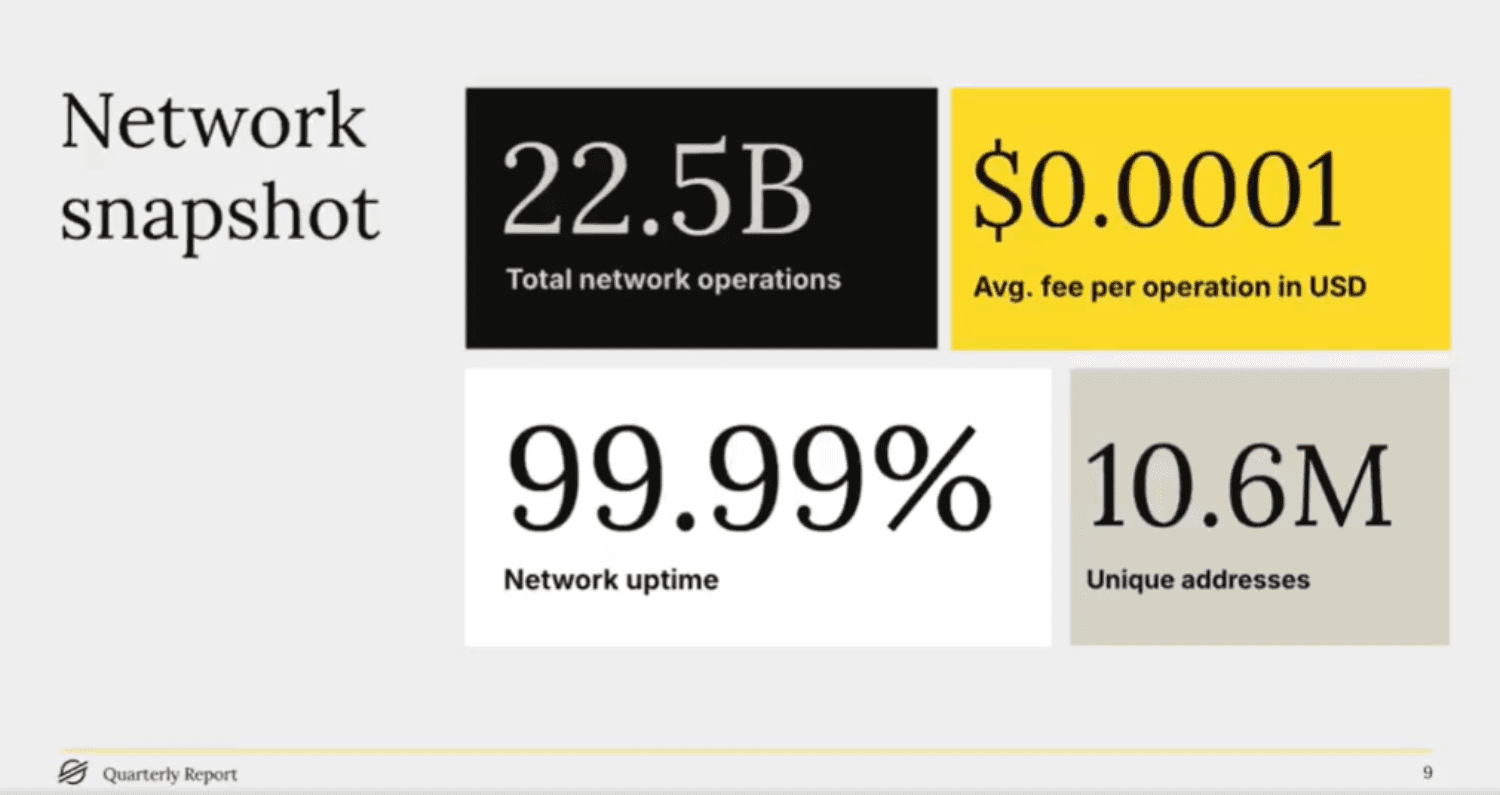
On Stellar today, transactions settle in roughly 9.5 seconds, cost around $0.0007 on average, and the network connects cash-to-crypto ramps in 100+ countries and territories. Onchain real-world asset value on Stellar passed $3 billion, and stablecoin market cap on the network driven largely by USDC has climbed past $300 million.
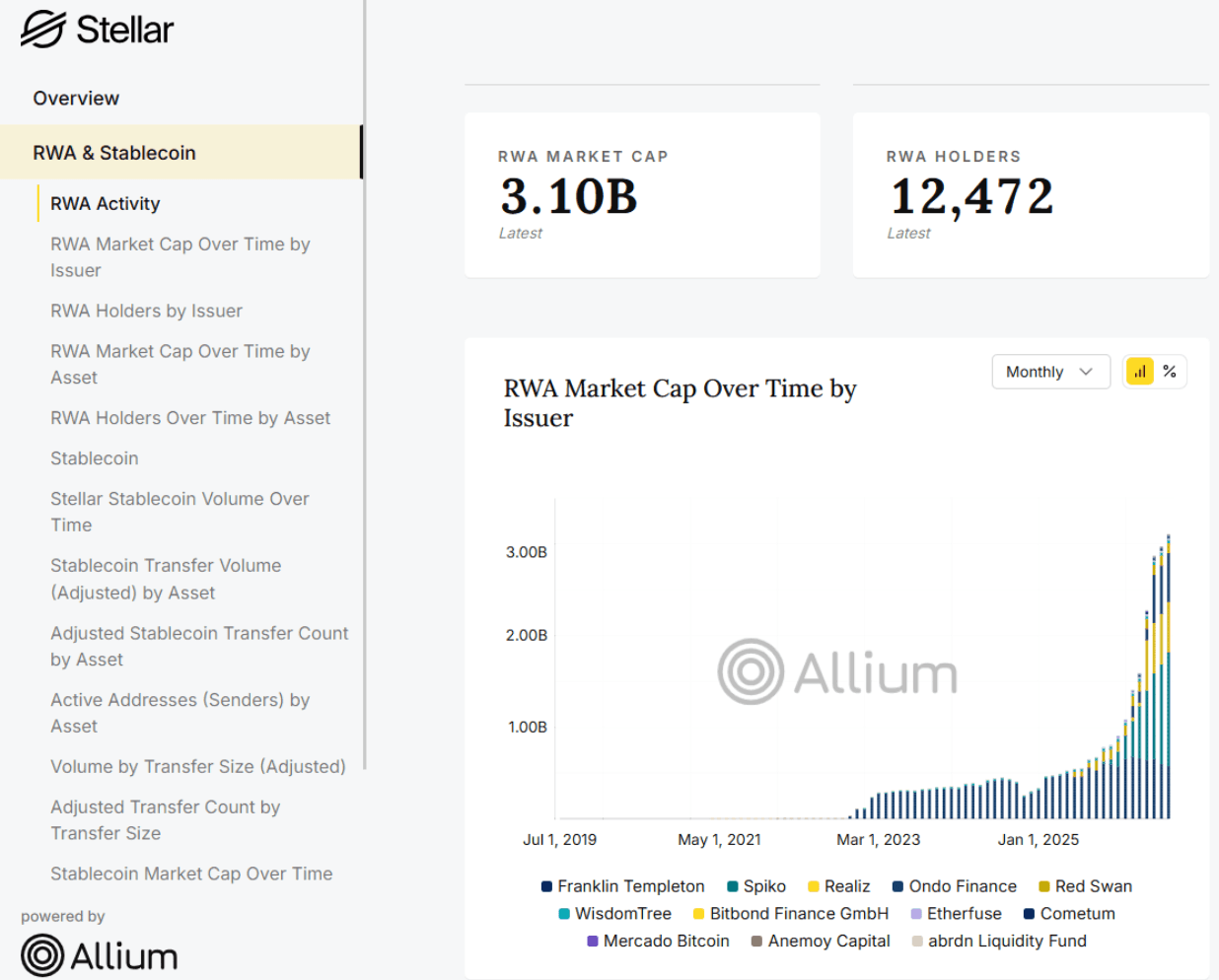
Stellar is trying to solve a problem most people have run into: sending money somewhere else (another country, another currency, another bank) is slow and expensive. A bank wire can take days and cost $25–50 in fees. Stellar moves value in about 10 seconds for a fraction of a cent, and it does that whether the value is a dollar, a euro, or a tokenized government bond.
In practice, using Stellar looks like using any payment app: you download a wallet app on your phone, fund it and send or receive money. Behind the scenes, that transaction settles on Stellar’s public ledger; from the user’s side, it just feels like Venmo or a banking app, except it can reach someone in another country instantly and cheaply, doesn’t require a bank account, and works around the clock. The network itself charges a tiny fraction of a cent per transaction (typically under 1 US cent for every 100,000 operations) and reaches over 475,000 cash-to-crypto on- and off-ramp locations worldwide, where digital money can be turned back into physical cash.
That last part relies on a piece of the puzzle worth understanding: anchors. An anchor is simply a regulated financial institution or fintech (a bank, a money-service business, an exchange) that sits at the edge of the Stellar network and does the boring-but-essential work of converting between real-world currency and digital assets on Stellar, while handling the KYC/AML and sanctions checks regulators require. MoneyGram is the best-known anchor, but there are hundreds of others in Stellar’s public Anchor Directory, covering different countries and currencies. Anchors are what lets a network of code actually touch the regulated financial system.
This powers things people can immediately relate to: a remittance service (Felix, for example, runs entirely inside WhatsApp) letting someone send money home cheaply and instantly; a company paying international payroll without pre-funding a foreign bank account in every country it operates in (Stellar-based payroll company BiGGER is one documented case); a small business invoicing overseas suppliers; or an NGO disbursing aid directly to phones instead of handing out cash. None of these require the recipient to know or care that a blockchain is involved.
This is also why Stellar shows up in humanitarian aid programs and government pilots: for someone without reliable banking access, a phone and a free wallet app is a much lower bar than opening a bank account, and the money arrives without a chunk of it disappearing into intermediary fees.
Real institutions, real money
What really sets Stellar apart from much of the industry is who is actually using it.
MoneyGram has been running remittance rails on Stellar for years and just renewed its partnership for another five years, expanding into new corridors including El Salvador.
Circle’s CCTP (Cross-Chain Transfer Protocol) went live on Stellar, letting USDC move natively (no wrapped tokens, no custodial bridges) between Stellar and 23 other blockchains.
The Republic of the Marshall Islands used Stellar to run the world’s first nationwide onchain disbursement of universal basic income in December 2025.
In May 2026, the Government of Bermuda announced it’s moving core payment and financial-services activity (wages, merchant payments, government fees) onto Stellar, as part of its stated goal to become the world’s first fully onchain national economy. Local merchants there currently lose 3–10% of transaction value to card fees; that’s the problem Stellar is being asked to solve at a national scale.
The Depository Trust & Clearing Corporation (DTCC): the entity that clears and settles the vast majority of U.S. securities transactions announced plans to bring its tokenization service to Stellar. Tokenized U.S. Treasuries, ETFs, and Russell 1000 constituents are expected on the network starting in H1 2027, with the same investor protections that exist today.
Figure launched YLDS on Stellar in May 2026, a SEC-registered, regulated yield-bearing dollar product, marking the first time a compliant, interest-bearing stablecoin of this kind has been available on the network. It’s built for regulated entities that need compliant holdings.
On the humanitarian side, Stellar Aid Assist has been delivering cash-based assistance through blockchain wallets including a milestone of three months of stablecoin payments to mothers in Haiti (launched in December 2025 to distribute over $200,000 in stablecoins to 325 mothers over six months) through a partnership with Hope for Haiti.
The numbers behind the growth
CEO Denelle Dixon, Jose Fernandez da Ponte, Tomer Weller, and Raja Chakravorti walked through the quarter’s results during the May Quarter-in-Review session, drawing on the “State of Stellar Q1 2026” report.
Stablecoin market cap climbed to roughly $300 million, up 20% quarter-over-quarter, with DeFi protocols like Aquarius, Blend, and SolarSwap driving activity. Aquarius, Stellar’s decentralized liquidity layer, crossed $50 million in TVL on its own.
Average daily Stellar Smart Contracts (formerly known as Soroban) volume reached $16 million per day, up from $2 million a year earlier: real contract calls and applications. Soroban gives developers strong tooling and performance while keeping Stellar’s low fees and fast settlement intact. It went live on mainnet in February 2024 with Protocol 20, and it’s what allows Stellar to support programmable stablecoins, tokenized real-world assets, and DeFi primitives (lending, DEXs, account abstraction) on top of the classic payments and asset-issuance layer that already existed.
New issuance kept arriving through Q1 and into Q2: AllUnity’s EURAU (a euro stablecoin) launched on mainnet in April, euro-denominated stablecoin volume grew 12x year-over-year, and Spiko’s EU T-Bill product roughly doubled, from about $520 million to $970 million. In Malaysia, Kenanga launched the country’s first tokenized money market funds on Stellar; in Singapore, SDF (Stellar Development Foundation) is helping build institutional settlement infrastructure with Marketnode.
The ecosystem is visibly accelerating: Stellar Community Fund v7.0 moved to milestone-based grant disbursement in January 2026 to get ecosystem funding out more efficiently. SDF has been running Stellar House pop-up events across financial hubs (Miami, Mexico City and now São Paulo) in August 2026 bringing together broker-dealers, custodian banks, and asset managers building at what SDF calls “the institutional edge of finance.” And Stellar Meridian, the Foundation’s flagship annual conference, returns October 28–29, 2026, this time in Lisbon.

Stellar has always made a bet that blockchain’s greatest value lies in infrastructure, the essential systems that power wage payments, remittances and the tokenization of real-world assets at minimal cost. The 2026 results provide the strongest evidence that this vision is delivering, with sustained growth driven by real-world adoption and expanding network activity.

As SDF CEO Denelle Dixon puts it: “We have the opportunity to create this truly open public global financial system that everyone can have access to.”

Interested in Staking with Us?
Join 30,000+ other stakers earning optimized rewards with our high-performance validators.
Get started and maximize your staking potential.
Other of our writings